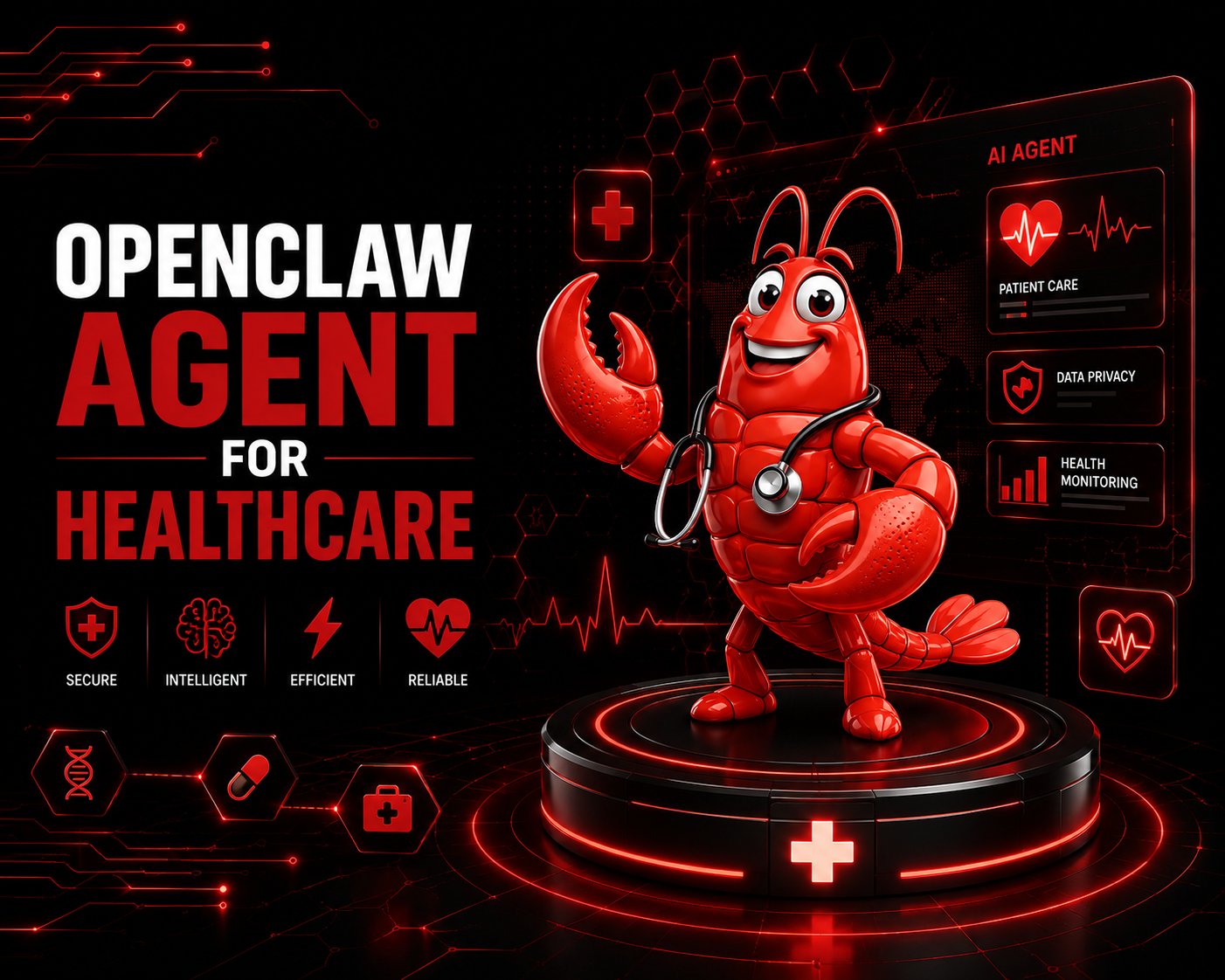
Openclaw Agent for Healthcare: Transforming Healthcare Operations with Intelligent Automation
Openclaw agent for Healthcare is helping healthcare organizations explore smarter ways to manage repetitive operational tasks, improve workflow coordination, and create more efficient experiences for both staff and patients. Healthcare environments often involve multiple processes happening simultaneously, including appointment scheduling, patient communication, follow-ups, reporting, data management, and internal coordination. When these activities depend heavily on manual effort, teams can face delays, missed tasks, and unnecessary administrative workloads.
An AI-powered agent can support healthcare operations by automating selected workflows and connecting different processes into a more structured system. The goal is not to replace healthcare professionals or make independent clinical decisions. Instead, the focus is on reducing repetitive administrative work and helping teams spend more time on responsibilities that require human expertise, judgment, and patient care.
Why Healthcare Organizations Need Smarter Workflow Automation
Healthcare operations can become increasingly complex as patient volumes, communication channels, and administrative requirements grow. A simple task such as scheduling an appointment may involve checking availability, confirming patient details, sending reminders, managing changes, and notifying the appropriate team members. When these processes are handled manually across multiple systems, even small delays can affect the overall patient experience.
An intelligent automation system can help organize these workflows by triggering appropriate actions based on predefined requirements and available information. This creates greater consistency while reducing the amount of repetitive work required from staff.
Common operational challenges include:
High volumes of appointment-related communication
Manual reminders and follow-up processes
Difficulty coordinating tasks between departments
Repetitive data entry and status updates
Delayed reporting and information sharing
Missed administrative tasks during busy periods
Fragmented workflows across multiple platforms
Limited visibility into pending tasks and operational bottlenecks
By addressing these challenges through carefully designed automation, healthcare organizations can build more efficient operational processes.
How an Openclaw Agent Can Support Healthcare Workflows
An Openclaw agent can be configured around the specific workflows of a healthcare organization. Rather than relying on one generic process, automation can be designed for different operational roles and requirements. This allows organizations to identify repetitive activities and create workflows that connect the right systems, actions, and notifications.
According to the capabilities described by OpenClaw Solution, its implementation services include workflow automation, scheduling, communication automation, reports and data management, and integrations with existing business tools. Its healthcare-focused content also describes potential applications such as patient routing, appointment optimization, context-aware communication, and workflow coordination.
Potential healthcare workflow applications include:
Automating appointment confirmations and reminders
Managing routine follow-up communications
Organizing internal task assignments
Triggering notifications based on workflow events
Supporting administrative reporting processes
Coordinating information between connected systems
Monitoring pending tasks and workflow deadlines
Escalating selected operational issues to appropriate staff
Streamlining routine communication processes
Providing better visibility into operational activities
The exact implementation should always be based on the organization's processes, authorized access, security requirements, and applicable healthcare regulations.
Improving Appointment and Scheduling Workflows
Appointment management is one area where repetitive administrative work can consume significant staff time. Patients may need reminders, confirmations, rescheduling assistance, and timely updates. Staff members may also need visibility into schedule changes and pending actions.
A properly configured automation workflow can help coordinate these activities. For example, when an appointment is created or updated within an authorized system, the workflow may trigger the appropriate confirmation or reminder process. If additional action is required, the relevant staff members can be notified based on the workflow rules.
Benefits of Automated Scheduling Support
Reduces repetitive manual communication
Helps deliver reminders consistently
Supports faster handling of schedule updates
Improves visibility into appointment-related tasks
Reduces the risk of administrative steps being overlooked
Allows staff to focus on higher-value responsibilities
Automation should support the healthcare team rather than operate beyond approved workflows. Important patient interactions and clinical decisions should remain under appropriate human oversight.
Streamlining Patient Communication
Consistent communication is essential for an organized healthcare experience. However, sending every routine message manually can become challenging when teams manage large numbers of appointments and administrative requests.
An Openclaw agent for Healthcare can potentially support structured communication workflows based on approved templates, triggers, and organizational rules. Messages can be connected to events such as appointment confirmations, reminders, administrative follow-ups, or requests for additional information.
This approach can help healthcare teams create a more consistent communication process.
Communication Workflow Advantages
Timely delivery of routine notifications
Consistent messaging across approved channels
Reduced manual workload for repetitive communications
Better tracking of communication-related workflows
Faster routing of requests to appropriate teams
Improved coordination between administrative staff
For healthcare use, communication workflows must be designed carefully to protect sensitive information and comply with applicable privacy, security, and communication requirements.
Better Internal Coordination and Task Management
Healthcare operations often require coordination among reception teams, administrators, support staff, and other authorized departments. When information is spread across disconnected tools, tracking responsibilities can become difficult.
An AI-powered workflow system can help centralize task-related activities by identifying triggers, assigning actions according to predefined rules, and providing visibility into workflow progress. For example, when one administrative step is completed, the next authorized task can be triggered automatically.
Key benefits can include:
Clearer task ownership
Improved visibility into workflow status
Automated reminders for pending activities
Faster identification of operational delays
Reduced dependence on manual task tracking
More structured communication between teams
The purpose is to improve operational coordination while maintaining appropriate human control over important actions.
Supporting Reports and Administrative Data Workflows
Generating and organizing operational information can also require significant manual effort. Teams may spend time collecting updates from multiple systems, preparing routine reports, and tracking key workflow metrics.
Automation can support these processes by connecting authorized data sources and generating structured updates based on configured requirements. This can make operational information easier to access and reduce repetitive reporting work.
Potential use cases include:
Routine operational status reports
Pending task summaries
Appointment workflow tracking
Administrative workload monitoring
Follow-up activity tracking
Workflow performance insights
Identification of recurring operational bottlenecks
Healthcare organizations should establish appropriate data governance practices before connecting sensitive information to automated workflows.
Integration with Existing Systems
One of the important factors in successful automation is the ability to work with existing tools. Healthcare organizations may already use different platforms for scheduling, communication, customer relationship management, reporting, and other operational activities.
OpenClaw Solution describes its implementation approach as connecting existing platforms and configuring workflows around business requirements. Its website also highlights integrations and custom workflow implementation as part of its services.
A well-planned implementation can focus on identifying where automation creates value without unnecessarily disrupting existing processes.
A Practical Implementation Approach
Identify repetitive and time-consuming administrative tasks
Map the current workflow from start to finish
Define which actions can be safely automated
Establish authorized access and permission controls
Connect approved systems and communication channels
Configure workflow triggers and escalation rules
Test the automation with appropriate human oversight
Monitor performance and improve the workflow over time
This structured approach helps organizations begin with practical use cases and expand automation based on measurable operational needs.
Security, Access Control, and Human Oversight
Healthcare automation requires careful attention to security and data handling. Any system involving sensitive information should operate with appropriate access controls, authorized permissions, and safeguards based on the organization's requirements and applicable regulations.
OpenClaw Solution states that its implementation approach includes controlled access, secure system environments, and data privacy considerations.
Before deploying an automated healthcare workflow, organizations should consider:
Who is authorized to access each system?
What information is necessary for the workflow?
Which actions require human approval?
How will access be monitored and controlled?
What audit or documentation requirements apply?
How will the workflow align with relevant privacy and healthcare regulations?
What happens when the automation encounters an exception?
AI automation should be implemented as an operational support system with clearly defined boundaries. Clinical diagnosis, treatment decisions, and other high-stakes healthcare activities require appropriate qualified human oversight and should not be delegated to automation without suitable validation, governance, and regulatory compliance.
The Future of Healthcare Operations
As healthcare organizations continue to manage increasing operational complexity, intelligent workflow automation can become a valuable tool for improving efficiency. The biggest opportunity often lies in reducing repetitive administrative work rather than attempting to automate every process.
A carefully implemented system can help teams coordinate routine activities, manage communication, monitor workflow progress, and organize operational information more effectively. This allows healthcare professionals and staff to spend more of their time on work that benefits from human attention and expertise.
The most successful automation strategies begin with clear objectives. Organizations should identify the processes creating the greatest administrative burden, establish measurable goals, and implement workflows gradually. Monitoring results and refining the system over time can help create an automation framework that grows alongside the organization.
Conclusion
Healthcare organizations need efficient systems to manage the growing demands of scheduling, communication, administration, reporting, and workflow coordination. AI-powered automation can support these functions by reducing repetitive tasks and creating more connected, structured processes.
With the right implementation strategy, an intelligent agent can support appointment workflows, routine communication, task coordination, reporting, and connected operational processes while maintaining appropriate access controls and human oversight. The focus should always be on responsible implementation, data protection, and clearly defined workflow boundaries.
For organizations looking to improve administrative efficiency and build smarter operational workflows, an Openclaw agent for Healthcare can provide a structured approach to intelligent automation that supports teams, improves coordination, and creates more time for meaningful patient-focused work.