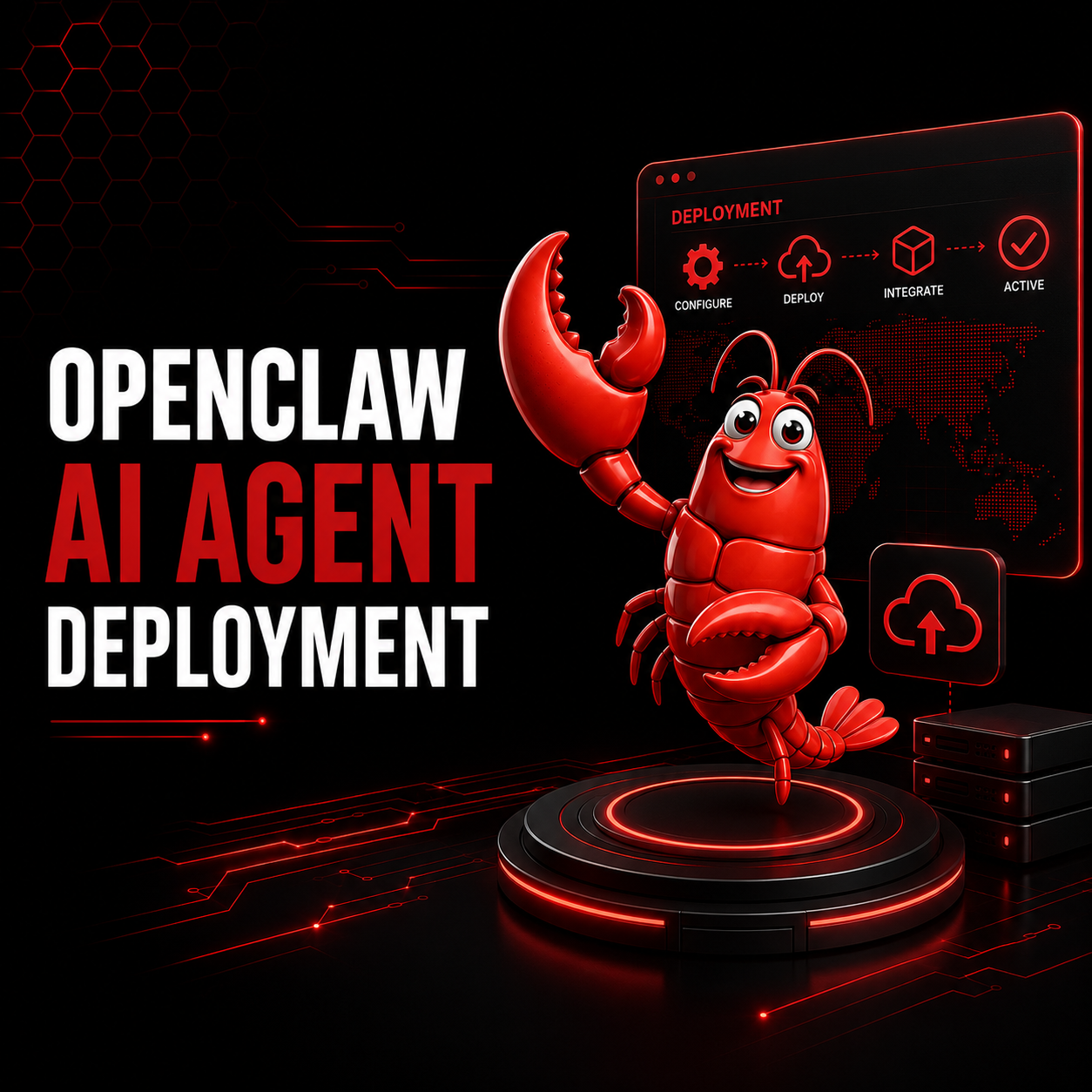
OpenClaw AI Agent Deployment: Build Smarter, More Efficient AI Workflows
OpenClaw AI agent deployment is becoming an important solution for businesses and professionals looking to automate repetitive tasks, streamline workflows, and create more capable AI-powered systems. Instead of relying only on traditional chat-based AI, OpenClaw can be configured as an agent that interacts with tools, manages tasks, maintains context, and supports automated workflows. A properly planned deployment can help businesses make better use of AI while maintaining control over how their agents operate.
What Is OpenClaw AI Agent Deployment?
OpenClaw is an open-source AI agent platform designed to run on a user's own machine or server. It provides a gateway that connects the AI agent with conversations, tools, channels, sessions, and automation capabilities. The official documentation describes the Gateway as the central point for sessions, routing, and channel connections.
OpenClaw AI agent deployment involves more than simply installing software. It includes preparing the environment, configuring the AI model, setting up the Gateway, connecting required services, defining agent behavior, and testing the complete workflow. A professional deployment approach helps ensure that the agent is configured according to the actual requirements of the user or business.
Why Is AI Agent Deployment Important?
AI agents can be useful when a task requires multiple steps rather than a simple question-and-answer interaction. With the right configuration, an agent can assist with information gathering, workflow automation, task management, communication, and other repetitive activities.
A well-planned deployment can provide several advantages:
Automates repetitive digital tasks
Reduces manual effort in everyday workflows
Creates consistent processes for recurring activities
Helps organize information and tasks
Supports integrations with different communication channels
Enables personalized AI workflows
Provides a foundation for expanding automation
Allows businesses to build AI assistance around their specific requirements
The objective is not simply to install an AI system but to create an environment where the agent can perform useful work safely and consistently.
How OpenClaw AI Agent Deployment Works
A typical deployment begins with understanding what the AI agent is expected to accomplish. Every business or individual may have different requirements, so the deployment should be planned around specific goals.
The process generally involves the following stages:
1. Requirement Analysis
The first step is identifying the tasks that the AI agent needs to handle. This may include customer communication, research, reminders, content workflows, information processing, internal assistance, or other repetitive activities.
Clearly defining the requirements helps determine which tools, integrations, permissions, and workflows are necessary.
2. Environment Preparation
OpenClaw requires a suitable environment before deployment. Current OpenClaw documentation lists supported Node.js versions and an API key from a selected model provider among the basic requirements.
The deployment environment should also be selected according to the expected workload. Depending on the use case, the agent may operate on a personal computer, dedicated server, or another suitable hosting environment.
3. OpenClaw Installation
Once the environment is prepared, OpenClaw can be installed and configured. The official setup process includes installation followed by onboarding, where the Gateway and authentication are configured.
Proper installation is important because the Gateway acts as the foundation for communication between the agent and its connected services.
4. AI Model Configuration
The next step is connecting an appropriate AI model and configuring the required credentials. The selected model should match the intended workload, response quality requirements, speed expectations, and budget.
Choosing the right model is important because different AI tasks may require different levels of reasoning, context handling, or response speed.
5. Agent Configuration
After the basic system is running, the agent itself needs to be configured. This includes defining its role, instructions, available tools, workspace, memory behavior, and operating boundaries.
A carefully configured agent is more likely to provide consistent results because it understands what it is responsible for and which actions it is allowed to perform.
Connecting OpenClaw With Workflows
One of the major benefits of OpenClaw is its ability to work with multiple communication channels and automation capabilities. The official documentation highlights channel connections, multi-agent routing, tools, skills, scheduled tasks, webhooks, and automation as part of the platform's capabilities.
This makes OpenClaw suitable for workflows where an AI agent needs to receive information, process it, and respond or take an appropriate action.
For example, an organization could design an AI workflow around:
Daily information summaries
Internal task assistance
Automated research
Content-related workflows
Document and information handling
Scheduled notifications
Customer communication support
Repetitive administrative activities
Multi-step business processes
The exact workflow should always be designed according to the organization's requirements and security policies.
Benefits of Professional OpenClaw AI Agent Deployment
Setting up an AI agent may appear straightforward, but creating a reliable deployment requires careful configuration. A professional approach can help avoid common setup problems and ensure that the system is structured around practical business objectives.
Better Workflow Planning
Professional deployment starts with the workflow rather than the technology alone. This helps ensure that the agent is solving a genuine business problem instead of simply adding another AI tool to an existing process.
Customized Agent Configuration
Every organization has different requirements. Agent instructions, tools, permissions, memory, and workflows can be configured according to specific needs.
Improved Productivity
By automating repetitive activities, employees can spend more time on tasks that require creativity, decision-making, and human interaction.
Scalable AI Workflows
A properly structured deployment can provide a foundation for expanding AI usage over time. New workflows, tools, and agents can be introduced as requirements grow.
Better Operational Control
AI agents can have access to tools and information, so permissions and operating boundaries should be carefully considered. A controlled deployment helps organizations decide what the agent can access and what actions require human approval.
Security Considerations for OpenClaw Deployment
Security should be considered from the beginning of any AI agent deployment. Because an agent may interact with tools, files, communication channels, and external services, unnecessary permissions can create avoidable risks. Research into OpenClaw has also highlighted security, privacy, access control, and traceability as important considerations for trustworthy deployment.
Important security practices include:
Use strong authentication and access controls
Provide only the permissions the agent actually needs
Protect API credentials and configuration files
Review connected tools and services regularly
Keep the deployment environment updated
Monitor important agent activities
Establish human approval for sensitive actions
Maintain backups of important configuration and data
Test workflows before using them in production
Security should not be treated as an afterthought. It should be part of the deployment strategy from the beginning.
Testing Your AI Agent Before Going Live
Testing is another essential part of deployment. An AI agent should be evaluated with realistic scenarios before being used for important business operations.
Testing can include:
Checking whether the agent follows instructions correctly
Testing different types of user requests
Reviewing tool usage
Checking responses for accuracy
Testing failure and recovery scenarios
Confirming access permissions
Evaluating scheduled workflows
Monitoring performance over time
A controlled testing phase helps identify configuration problems before they affect real users or business processes.
Why Choose a Customized OpenClaw Deployment?
A customized deployment allows the AI agent to be designed around actual business needs rather than forcing a business to adapt its processes to a generic setup.
With a customized approach, organizations can define:
The purpose of the AI agent
The tasks it should perform
The information it can access
The tools it can use
The communication channels it should support
The workflows it should automate
The actions that require human approval
The performance requirements of the system
This creates a more focused AI environment and makes it easier to measure whether the deployment is delivering meaningful value.
Build a Smarter AI-Powered Future
AI agents are moving beyond simple conversations and becoming useful components of digital workflows. OpenClaw provides an open-source environment for creating agents that can interact with tools, channels, sessions, and automation systems.
However, successful implementation depends on more than installing the platform. It requires thoughtful planning, appropriate configuration, secure access management, workflow testing, and ongoing optimization. Businesses that approach deployment strategically can create AI systems that support everyday operations while keeping control over how those systems work.
If you are looking to introduce AI automation into your business, a properly configured OpenClaw environment can provide a flexible foundation for developing practical AI-powered workflows. From initial setup and configuration to agent customization, integrations, security, and testing, every stage contributes to creating a reliable solution.
With the right strategy, OpenClaw AI agent deployment can help transform repetitive digital processes into smarter, more efficient, and scalable AI-powered workflows.