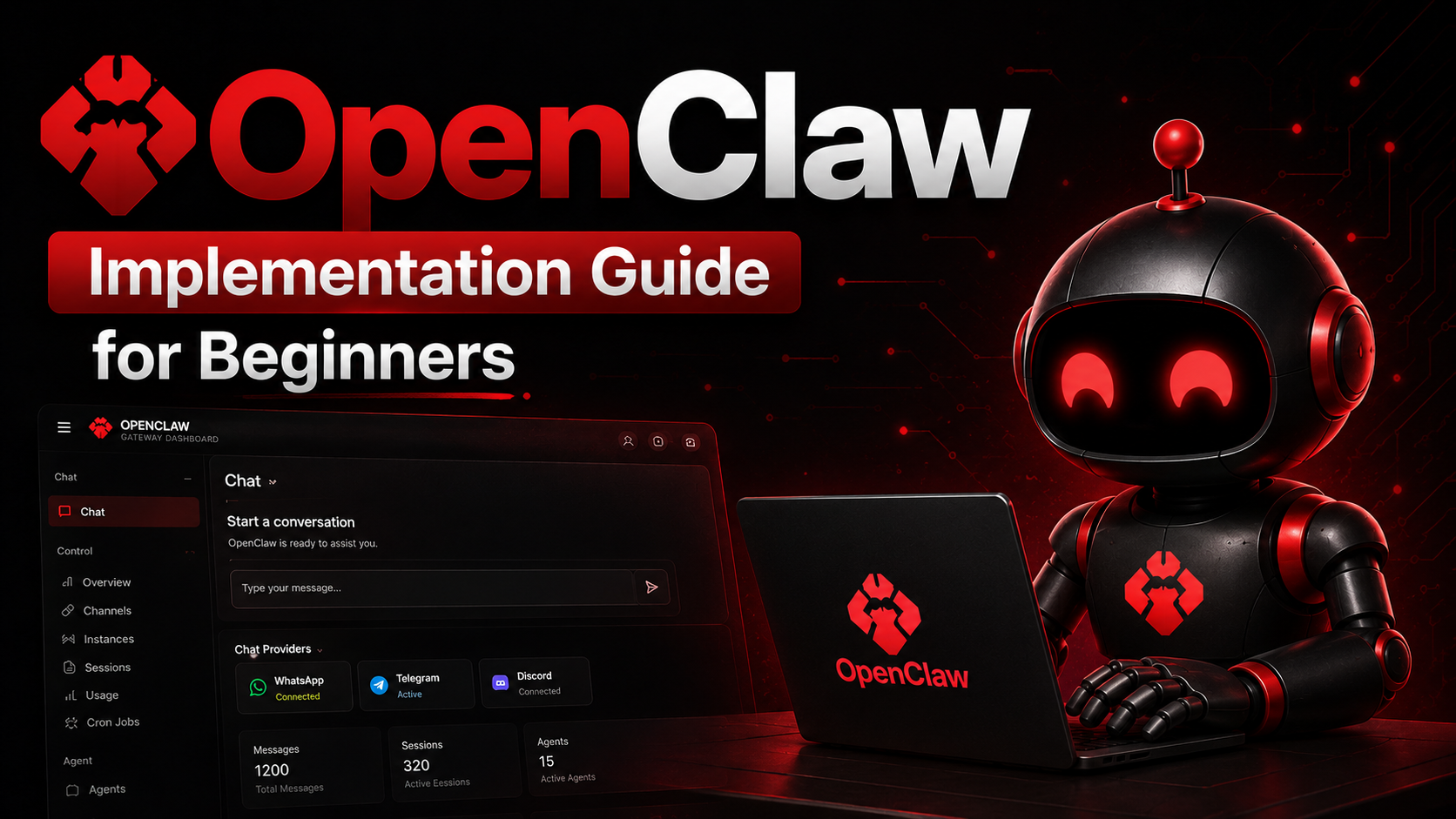
OpenClaw Implementation Guide for Beginners
Modern businesses are moving toward automation to reduce repetitive work, improve operational speed, and create better customer experiences. Companies that rely only on manual processes often face delays, communication gaps, and inconsistent performance. This is where openclaw implementation services become valuable for businesses aiming to improve workflow efficiency and long-term scalability.
A successful implementation is not just about installing tools. It requires planning, system alignment, workflow customization, team onboarding, and continuous optimization. Businesses that follow a structured implementation strategy can experience faster operations, improved productivity, and better decision-making across departments.
Building a Strong Foundation Before Implementation
One of the most common mistakes businesses make is starting automation without understanding existing operational gaps. Before implementing any workflow system, organizations should identify:
Repetitive tasks consuming employee time
Departments with communication delays
Areas with frequent manual errors
Slow approval processes
Customer support bottlenecks
Data management inefficiencies
A detailed operational review helps businesses create a practical roadmap for implementation. Instead of automating everything at once, companies should prioritize processes that generate immediate operational value.
This approach helps openclaw implementation services deliver measurable improvements without disrupting daily business activities.
Setting Clear Business Objectives
Implementation becomes more effective when businesses define specific goals from the beginning. Companies should focus on measurable outcomes such as:
Reducing response times
Improving lead handling
Increasing productivity
Simplifying internal approvals
Enhancing reporting accuracy
Automating customer communication
Improving task tracking
Clear objectives help implementation teams customize workflows according to operational needs instead of using generic automation structures.
For growing companies, goal-driven implementation creates a scalable framework that supports future expansion without increasing operational complexity.
Choosing the Right Workflow Structure
Every organization operates differently. A manufacturing company may need production tracking automation, while a service-based business may require lead management and communication workflows.
Successful implementation depends on designing workflows that match actual business operations. This includes:
Department-Based Automation
Different departments require different automation logic. Examples include:
Sales pipeline automation
HR onboarding workflows
Customer support ticket routing
Finance approval systems
Inventory tracking automation
Project management dashboards
Custom workflow structures improve coordination between teams and reduce unnecessary delays.
Role-Based Access Control
Implementation should include proper access management to ensure employees only access relevant information. This improves security and minimizes operational confusion.
Businesses using openclaw implementation services often benefit from structured permission systems that improve collaboration without compromising sensitive data.
Data Migration and System Integration
Many businesses already use multiple platforms for communication, reporting, customer management, and project tracking. A proper implementation strategy should integrate these systems instead of replacing everything immediately.
Integration planning usually includes:
CRM synchronization
Email workflow integration
Internal communication tools
Customer support systems
Reporting dashboards
Cloud storage connectivity
Smooth data migration is critical during implementation. Poor migration planning can create data inconsistencies and workflow interruptions.
A phased migration approach helps businesses maintain operational continuity while transitioning to automated systems.
Creating User-Friendly Automation
Automation should simplify work, not complicate it. One major reason implementation projects fail is because employees struggle to adapt to overly complex systems.
Successful implementation focuses on:
Simple dashboard layouts
Clear workflow visibility
Easy task assignment
Automated notifications
Minimal manual intervention
Quick approval mechanisms
User-friendly systems increase employee adoption and improve overall productivity.
Businesses investing in openclaw implementation services often achieve better results when workflows are designed around employee usability instead of technical complexity alone.
Employee Training and Onboarding
Technology adoption depends heavily on employee confidence. Even advanced systems fail if teams do not understand how to use them effectively.
Implementation should include structured onboarding programs such as:
Workflow demonstrations
Department-specific training
Role-based tutorials
Practical usage sessions
Troubleshooting guidance
Reporting tutorials
Training helps employees understand how automation supports their daily responsibilities rather than replacing them.
Organizations that prioritize onboarding usually experience faster implementation success and smoother operational transitions.
Automating Communication Channels
Internal communication delays can slow down operations significantly. Automation can improve communication through:
Automated task notifications
Instant approval alerts
Customer follow-up reminders
Escalation triggers
Team collaboration updates
These automated communication systems reduce missed tasks and improve operational accountability.
For customer-facing businesses, communication automation also improves response speed and customer satisfaction.
Monitoring Workflow Performance
Implementation is not a one-time process. Businesses should continuously evaluate workflow performance after deployment.
Important performance indicators include:
Task completion time
Workflow error rates
Approval turnaround speed
Customer response time
Employee productivity metrics
Operational cost reduction
Performance tracking helps businesses identify areas requiring further optimization.
Advanced reporting dashboards included in openclaw implementation services provide businesses with real-time operational insights that support better decision-making.
Reducing Manual Dependency
One of the biggest advantages of implementation is reducing dependency on manual coordination. Businesses can automate repetitive activities such as:
Lead assignment
Invoice approvals
Follow-up reminders
Status updates
Internal escalations
Reporting generation
This allows employees to focus on strategic and customer-focused activities instead of repetitive administrative work.
Reduced manual dependency also minimizes operational risks caused by human errors.
Improving Scalability for Growing Businesses
As businesses grow, managing operations manually becomes increasingly difficult. Implementation creates scalable operational frameworks that support expansion without increasing management complexity.
Scalable systems help businesses:
Handle larger customer volumes
Manage multiple teams efficiently
Maintain workflow consistency
Improve reporting accuracy
Reduce operational bottlenecks
Businesses using openclaw implementation services can expand operations while maintaining process efficiency and service quality.
Security and Compliance Considerations
Workflow implementation should also address operational security. Businesses handling customer data or sensitive information need secure access management and workflow monitoring.
Important security practices include:
Encrypted data handling
Controlled access permissions
Activity tracking logs
Automated backup systems
Compliance-friendly workflows
Strong security implementation improves operational reliability and protects business information from unauthorized access.
Avoiding Common Implementation Mistakes
Many businesses experience automation challenges because of rushed implementation decisions. Common mistakes include:
Automating poorly designed processes
Ignoring employee feedback
Overcomplicating workflows
Lack of training
No performance monitoring
Poor integration planning
Businesses should focus on gradual implementation with continuous optimization instead of large-scale immediate deployment.
A practical and flexible implementation strategy produces better long-term results.
Future-Focused Workflow Optimization
Automation technologies continue evolving rapidly. Businesses should build systems that support future updates and workflow expansion.
Future-ready implementation strategies include:
Modular workflow design
Flexible automation rules
Scalable reporting systems
Multi-platform integrations
AI-assisted workflow improvements
Forward-thinking implementation helps businesses remain competitive in rapidly changing industries.
Companies investing in openclaw implementation services can create operational systems that adapt to future business requirements while maintaining efficiency and productivity.
Conclusion
Business automation is no longer limited to large enterprises. Companies of all sizes are adopting smarter workflow systems to improve speed, efficiency, and operational accuracy. A structured implementation approach helps organizations reduce manual work, improve collaboration, and create scalable operational frameworks.
Successful implementation requires careful planning, workflow customization, employee onboarding, system integration, and continuous monitoring. Businesses that focus on long-term operational improvement instead of short-term automation trends achieve better results.
With the right strategy, openclaw implementation services can help businesses simplify complex operations, improve productivity, and create a more efficient digital workflow environment for sustainable growth.